The significant importance of using Philadelphia Vital Statistics for this project include:
•Providing a quantitative and standardized source of data on violence in Philadelphia, allowing for comparisons and trend analysis over time.
• Highlighting the impact of violence on the population, particularly vulnerable groups such as young black men.
• Identifying high-risk areas or populations that may require targeted interventions and resources to address violence effectively.
• Supporting evidence-based decision-making and the development of violence prevention programs that are tailored to the specific needs of the community.
• Fostering collaboration among public health agencies, community organizations, and policymakers to work towards reducing violence and promoting community safety.
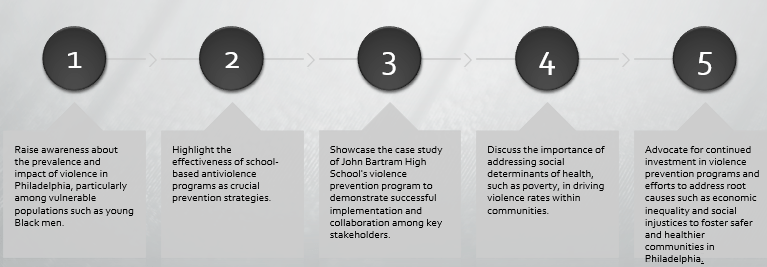
Objectives:
Background:
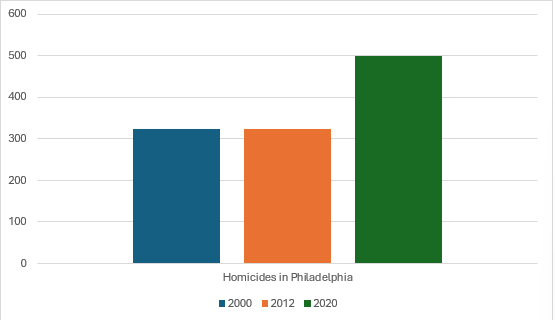
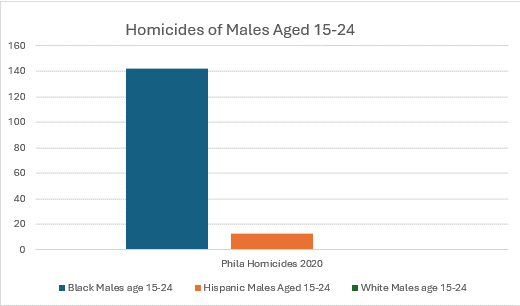
Philadelphia has historically had some of the highest homicide rates when compared to other Urban cities. In the year 2000, there were 323 homicides which made homicides the 10th leading cause of death at that time (Philadelphia vital statistics, 2000). In 2012 and 2020 homicides were listed as the 8th and 7th leading cause of death respectively. As we examine closer and look at the age group of 15-24, we find the alarming findings that the #1 cause of death for Black males in this age group is homicides This blog focuses on the young Black men in Philadelphia because they are dying from disproportionately high rates when compared to other sexes, races and age groups. For example, in 2020 Philadelphia Department of Public Health reported 142 deaths of Black males age 15-24. That same year, Hispanic males of same age group was 13 and white males were reported the number being too small to document which means less than 10 (Philastats,2023). Despite the efforts to address violence rates in Philadelphia, it remains a significant issue impacting individuals, families, and communities. School-based antiviolence programs have shown effectiveness in prevention strategies, but there is a need to further understand and implement additional approaches to combat violence in the city. Addressing root causes, building community support networks, and advocacy for policy change are essential in addressing the systemic inequalities contributing to violence in Philadelphia.
The World Health Organization defines violence as “…intentional use of physical force or power, threatened or actual, against oneself, another person, or against a group or community, that either results in or has a high likelihood of resulting in injury, death, psychological harm, maldevelopment, or deprivation” (WHO, 1996). Violence is a critical public health issue that negatively impacts individuals, families and communities and can lead to injury, depression, and PTSD (CDC). I will explore what strategies and approaches can be implemented to address and prevent violence in Philadelphia, specifically focusing on school-based antiviolence programs as a prevention strategy.
The adolescent phase includes important changes such as developmental, social and physical changes and these changes shape how they assess risk and navigate their environments (Culyba, 2016). During this time they are vulnerable to making poor decisions and participating in risky behaviors. Notably, parts of the brain that are responsible for decision making and behavior inhibition are still developing during the adolescent phase (Gavine,2016). While research has shown that primary prevention is strongest in younger ages, it is essential that programs are in place for the high-risk adolescent. This leads to why I think that School-based antiviolence programs are a crucial component of preventing violence in Philadelphia, along with addressing root causes such as economic inequality and social injustices, strengthening community ties, advocacy for policy change, and dispelling myths and misconceptions about violence.
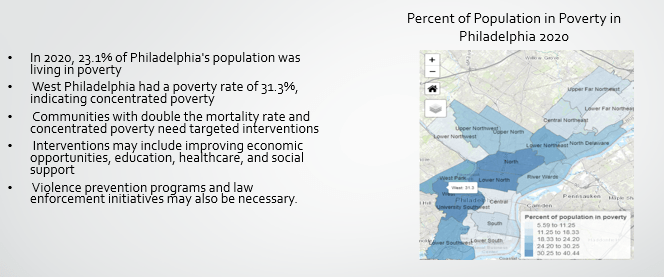
Research has shown that social determinants of health have a direct impact on violence. The World Health Organization defines Social determinants of health ( SDOH) as “non-medical factors that influence health outcomes. They are the conditions in which people are born, grow, work, live, and age, and the wider set of forces and systems shaping the conditions of daily life.” Factors such as concentrated poverty drive health inequalities such as violence ( CDC).Schools can play a critical role in addressing health inequalities and promoting health equity among all students by promoting early intervention and prevention, creating safe and supportive environments, addressing trauma and ACEs, promoting equity and inclusion, and building resilience and empowerment among students.
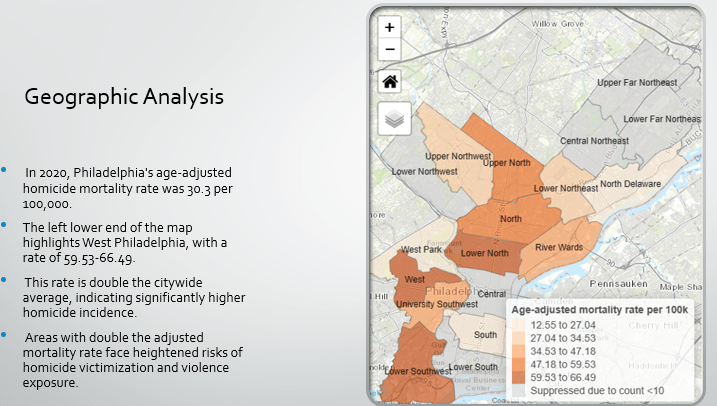
Geographic Analysis
In response to increased violence and homicides involving the youth, school-based violence prevention programs have been implemented. Research has shown that by incorporating evidence based recommendation such as including physical, verbal and emotional behavior changes as target outcomes can lead to a more successful program. It was also advised that programs should have a curricula that is intensive and activity based ( Kovalenko, 2022). Maximizing student engagement is a key factor to program effectiveness ( Thompkins, 2014).
Case Study

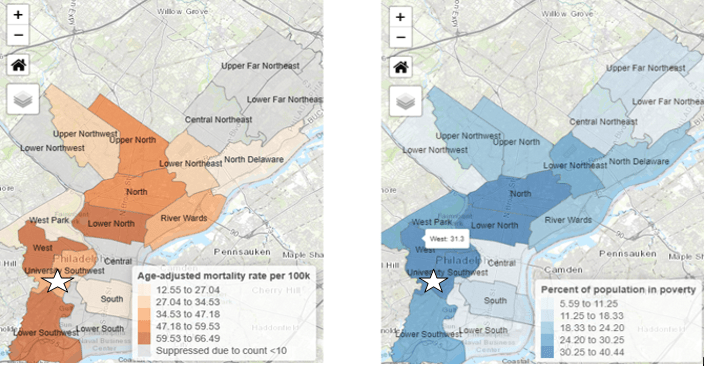
- John Bartrum is a high school in southwest Philadelphia
- Located in an area with a 47.18-59.53% adjusted mortality rate and concentrated poverty, making it ideal for violence intervention
- Received a $1 million grant in October 2022 for their violence prevention program
- Partnerships with Temple University, CureViolence, SDP Office of Support Services, Philadelphia Police Department, and juvenile probation department
- Project assistant leads crisis intervention, violence interruption, de-escalation, and mediations, with in-depth case management services for teens at risk of gang involvement (Searles, 2022)
- Pilot program has been operating for approximately 1 year with a team including a program manager, two case managers, a full-time research assistant, and a project director (Caiolla, 2024)
- *****( Research of Program is ongoing)
Significant Limitations of using Philadelphia Vital Statistics for this blog includes:
•Incomplete data: Vital statistics may not capture all incidents of violence, especially if they are not reported or documented accurately.
• Data accuracy: There may be errors or inconsistencies in the data reported, leading to potential inaccuracies in the analysis of violence rates.
• Data availability: Certain demographic or geographic information may be missing or limited in the vital statistics, making it challenging to fully understand the factors contributing to violence in Philadelphia. ( For example, Instead of 2010’s data, I had to look at 2012 because 2010 wasn’t available)
• Data lag: Vital statistics data may not be up-to-date, which could impact the timeliness of identifying trends and implementing interventions to address violence in real-time.
Conclusion
The issue of violence, particularly homicides, has long been a significant concern in Philadelphia, with rates consistently high over the years. Despite efforts to address this issue, it remains a pressing challenge affecting individuals, families, and communities, especially among young black men who bear a disproportionate burden of violence-related deaths. The prevalence of violence in Philadelphia reflects broader systemic inequalities, including economic disparities and social injustices, which contribute to heightened vulnerability among certain populations. Social determinants of health, such as concentrated poverty, play a significant role in driving health inequities and violence within communities. To address and prevent violence in Philadelphia, a multifaceted approach is needed. School-based antiviolence programs represent a crucial prevention strategy, particularly given the vulnerability of adolescents to risky behaviors and the importance of early intervention. These programs, when evidence-based and tailored to maximize student engagement, have shown effectiveness in reducing violence and promoting positive behavioral outcomes. Targeted interventions and resources are essential, particularly in areas with double the adjusted mortality rate and concentrated poverty. Initiatives like the violence prevention program implemented at John Bartram High School demonstrate the potential for collaborative efforts involving schools, universities, community organizations, and law enforcement to address violence comprehensively. Moving forward, continued investment in violence prevention programs, along with efforts to address root causes such as economic inequality, strengthen community ties, advocate for policy change, will be crucial in fostering safer and healthier communities in Philadelphia. By addressing the underlying determinants of violence and promoting equity and social justice, we can work towards building a city where all residents can thrive free from the threat of violence. When it comes to solving the problem of violence in the city, we are not there yet but we are definitely on the right track.
References/Credits
1. Centers for Disease Control and Prevention. (n.d.). Community Violence Prevention. Retrieved from[ Community Violence Prevention |Violence Prevention|Injury Center|CDC ]
2.Chalkbeat. (2024, January 11). One Philadelphia school’s strategy to stop student violence. Retrieved from [One Philadelphia school’s strategy to stop student violence – Chalkbeat]
3.Culyba AJ, Jacoby SF, Richmond TS, Fein JA, Hohl BC, Branas CC. Modifiable Neighborhood Features Associated With Adolescent Homicide. JAMA Pediatr. 2016;170(5):473–480. doi:10.1001/jamapediatrics.2015.4697
4.Gavine, A. J., Donnelly, P. D., & Williams, D. J. (2016). Effectiveness of universal school-based programs for prevention of violence in adolescents. Psychology of Violence, 6(3), 390.
5.Kovalenko, A. G., Abraham, C., Graham-Rowe, E., Levine, M., & O’Dwyer, S. (2022). What works in violence prevention among young people?: A systematic review of reviews. Trauma, Violence, & Abuse, 23(5), 1388-1404.
6.Thompkins, A. C., Chauveron, L. M., Harel, O., & Perkins, D. F. (2014). Optimizing violence prevention programs: an examination of program effectiveness among urban high school students. The Journal of school health, 84(7), 435–443. https://doi.org/10.1111/josh.12171
7. WHYY.(2022, October 21). Bartram High gets $1 million grant for youth violence initiative. Retrieved from [Bartram High gets $1 million grant for youth violence initiative – WHYY]
8. World Health Organization. (n.d.). Violence Prevention Alliance Approach. Retrieved from [Violence Prevention Alliance Approach (who.int)]
Photo Credits
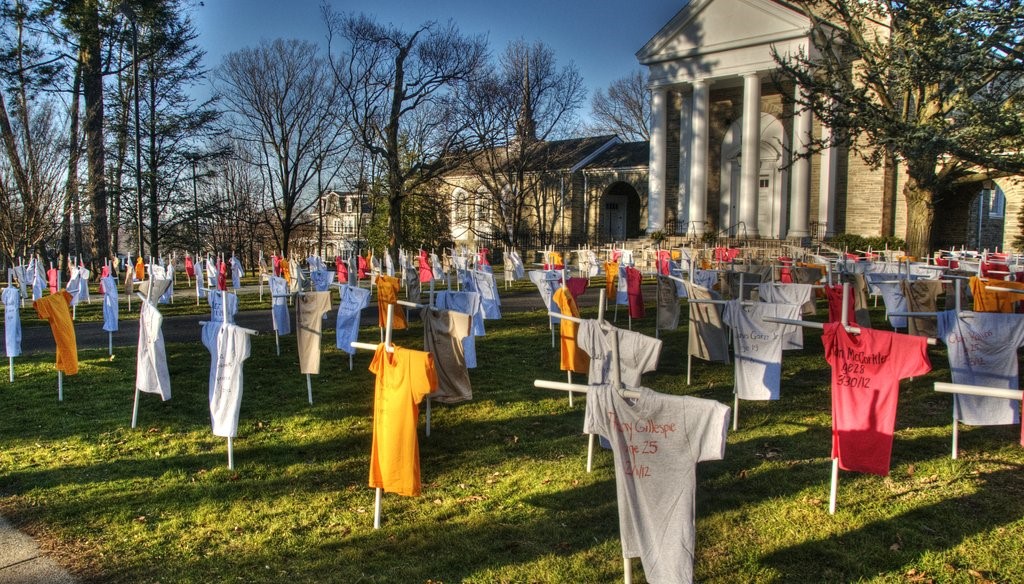
1.A gun violence for memorial marking each fatality in Philadelphia in 2012. Credit: Cocoabiscuit/Flickr
2.Bartrum H.S. Photo.John Bartram High School – The School District of Philadelphia (philasd.org



 Nurse Ty's Public Health Blog
Leave a comment